
01Cold cut
Heat-sensitive requirement
Avoid a heat-affected cutting zone where thermal change at the edge is unacceptable.
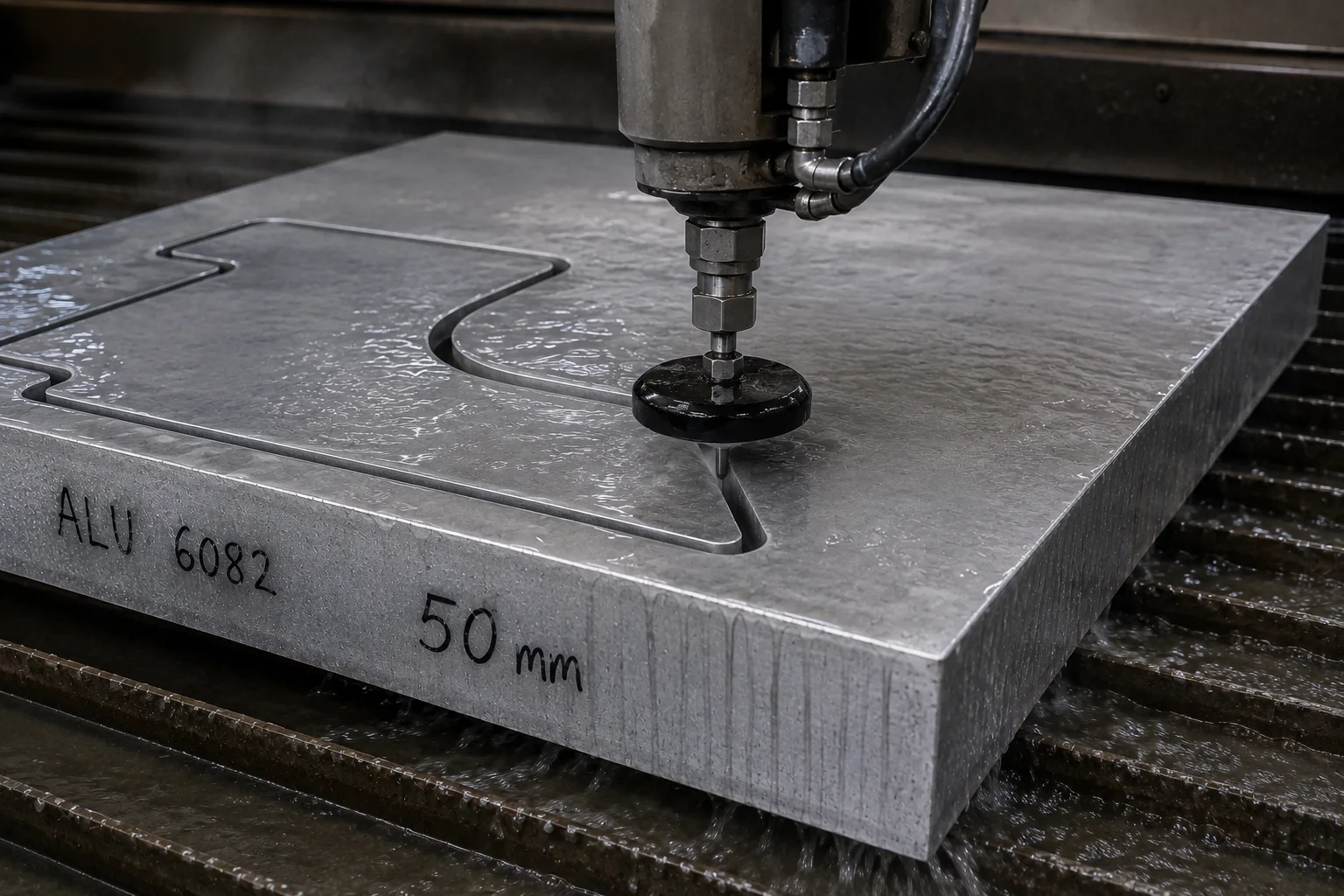
Submit an eligible thick, reflective or heat-sensitive part for waterjet review, with the material, edge requirement and finished dimensions kept together.
Waterjet is offered where a cold cut gives the part a clear production advantage. Metalldel reviews the uploaded contour together with material, thickness, pierce positions and functional edges before confirming the route.
Choose only the edge quality the part needs. Taper, striation and surface expectations influence production time and price, so critical faces should be identified in the request.
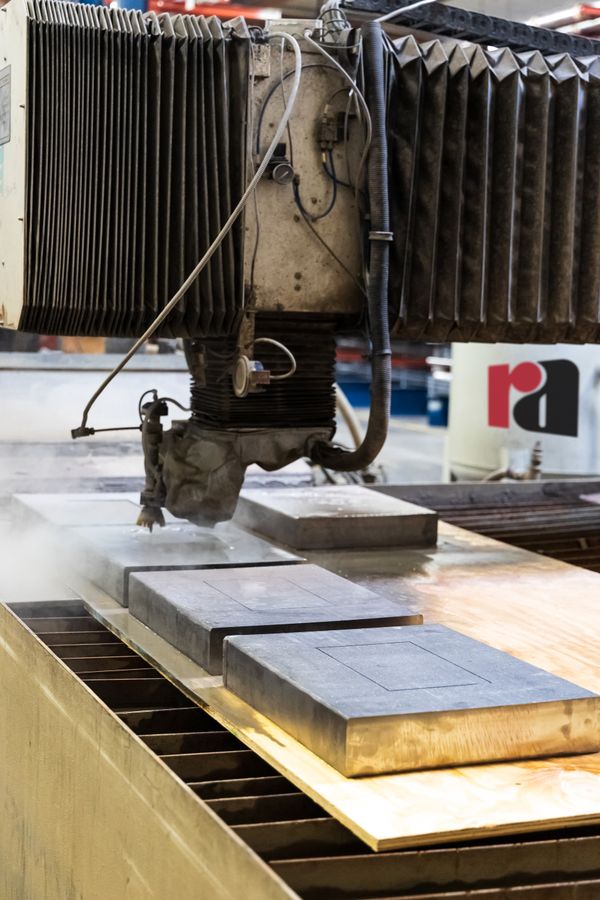
Avoid a heat-affected cutting zone where thermal change at the edge is unacceptable.
Review heavier sections and materials that may be inefficient or unsuitable for the available laser process.
Cut selected aluminium, copper alloys and other eligible materials without relying on optical absorption.
Create a useful blank that can continue to machining, forming or assembly with less bulk material to remove.
Pierce position and method are reviewed around the material, thickness and risk of local damage.
The jet can produce taper and visible lines; functional faces and tolerances should be identified.
Holes, narrow bridges and tight internal corners are checked against jet width and material thickness.
Provide a clean flat profile and confirm units, material and quantity.
Metalldel checks material, thickness, pierces, contours and edge requirements.
The production setup balances the required edge with time and cost.
Parts are cut, checked to the agreed order and prepared for the next operation or delivery.
Available grades and thicknesses are confirmed through production review because waterjet is not yet driven by the online stock catalogue.
Request review when the material, thickness or heat sensitivity makes a cold-cut process important. Metalldel confirms the suitable route for the submitted part.
Send dimensionally correct geometry and identify the material, thickness, critical edges and any cosmetic requirement.
That depends on the agreed quality and next operation. State any functional or visible-edge requirement before production review.
Configure an eligible part online or send the material specification for production review.